Home » Global issues » Recent Articles:

The Challenge of An Aging Population

The Challenge of An Aging Population

In 2001, I was editing a magazine on the future of church ministry. I approached respected author, academic and church consultant, Richard Kew to write about what he thought was a critical future trend the church needed to be aware of. This is what he wrote. Now, nearly a decade later, it’s still important, and his advice should still be heeded.

Last weekend I was invited to speak at, and participate in, a consultation on ministry among the aging. It was a fascinating weekend. I learned a lot, met some interesting people, and (I hope) was able to make a small contribution to the process. This weekend I sat down with the November 3, 2001, issue of The Economist, and found a major survey of the near future by Peter Drucker that has me questioning — as well as building upon — some of the things that I said last Saturday!

Drucker is venerable in every sense of that word. Now 92, his mind is still as clear as a bell, and for someone who is highly unlikely to live long enough to see some of the things he is talking about, he is obviously very engaged with what tomorrow might look like. At the heart of some of his projections is his recognition that the developed world’s population is aging to such an extent, that the social safety nets all western democracies have put in place are utterly inadequate.

Here’s a nugget to ponder: “By 2030, people over 65 in Germany, the world’s third-largest economy, will account for almost half the adult population, compared with one-fifth now. And unless the country’s birth rate recovers from its present low of 1.3 per woman, over the same period its population of under-35s will shrink about twice as fast as the older population will grow. The net result will be that the total population, now 82m, will decline to 70m-73m. The number of people of working age will fall by a full quarter, from 40m to 30m.”

… Continue Reading

Graeme Codrington writes for Jim Wallis and Sojourners

Graeme Codrington writes for Jim Wallis and Sojourners

This was originally posted on 28 March 2008

Every now and again, I make a connection with one of my heroes. Sometimes it’s attending a live event with them (I usually find a way to get them to sign a copy of their books for me – I collect signed books!). I have had the privilege of organising a few of these events. I have also shared a platform with some of them. Sometimes it’s a bit more random – I have bumped into a few people in the weirdest places on my travels.

I have long been an admirer of Jim Wallis, and his work with Sojourners. It was a real privilege to be asked to contribute to a series of blog entries about the Iraq War, leading up to the 5th anniversary of the start of the war. My entry has now been posted here – and reproduced below. Read the whole series here.
… Continue Reading

Bible verses on gun sights

Bible verses on gun sights

This story is a bit old, but I only picked up on it recently. In January this year, it emerged that a Michigan company, Trijicon who provides sights for high powered rifles and guns in America, had been putting Bible verses onto the sights provided to the American military. It has a $660 million multi-year contract to provide up to 800,000 sights to the Marine Corps, and additional contracts to provide sights to the U.S. Army. Read the story here – including a video.

The picture I saw (included in this post), referenced John 8:12, where Jesus said: “I am the light of the world. Whoever follows me will never walk in darkness, but will have the light of life.” I also saw 2 Corinthians 4:6: “For God, who said, ‘Let light shine out of darkness,’ made his light shine in our hearts to give us the light of the knowledge of the glory of God in the face of Christ.” The company believes this is part of an evangelistic mindset. Besides the standard, “Honesty, integrity, quality, teamwork, etc” of their corporate values, they also have a value of “Morality” which they define as: “We believe that America is great when its people are good. This goodness has been based on biblical standards throughout our history and we will strive to follow those morals.” They achieve this by manufacturing and selling sights for rifles with Bible verses on them??

Might there be other Biblical verses they could consider including on their products? Maybe Luke 6:31: “Do to others as you would have them do to you.” Or maybe John 14:27: “Peace I leave with you; my peace I give to you. Not as the world gives do I give to you.” What about Romans 14:19: “Let us therefore make every effort to do what leads to peace and to mutual edification.” Or Psalms 11:5: “The soul of the Lord hates… those who love violence.”

The fact that these sights are used in a Muslim nation by a military that specifically does not act in the name of any religion just adds fuel to this fire. The sights are also fitted to guns supplied to soldiers of the militaries of those Muslim nations, supported by the USA. Two years ago, it emerged that some US soldiers were using a Quran as a target in firing practice. Now this story. No wonder the Muslim nations still hark back to Crusades! Shooting Muslims with Jesus rifles – that’s not even a metaphor for Crusade!

The Director of Sales and Marketing for Trijicon, Tom Munsen, said that the verses had “always been on their sights, and there was nothing wrong or illegal in adding them”. Really? Is he serious? This is a self avowed Christian company on a Christian mission. And they see “nothing wrong” in helping people to kill other people more effectively?

Within a week of this story breaking, Trijicon had agreed to remove the verses from the sights supplied to the US military.

I am almost speechless at this story. It is SO wrong and SO many levels that I don’t know where to begin. I’ll just leave you to decide how to respond…

Synthetic Life created – this changes everything

Synthetic Life created – this changes everything

I have been predicting it for some time, and today it was announced! Craig Venter runs the company that first sequenced the human genome. Now, his team has created what they’re calling synthetic life.

They’ve actually created an entirely synthetic genome, built from chemicals in a lab. They inserted the genome into a cleaned out cell. When they did so, the new genome fired up exactly as if it were a “natural” genome.

Read the press release here.

Of course, everything has gone crazy. The media are in a frenzy. Some claim he’s playing God. Others are freaking out that these things will “escape” into nature and destroy life. And some are saying that it will end disease and bring about paradise on earth. The truth, as always, will lie somewhere in between these extreme views.

But this changes everything. Mark this day. A new era has dawned.

Christians, homosexuals and B&Bs

Christians, homosexuals and B&Bs

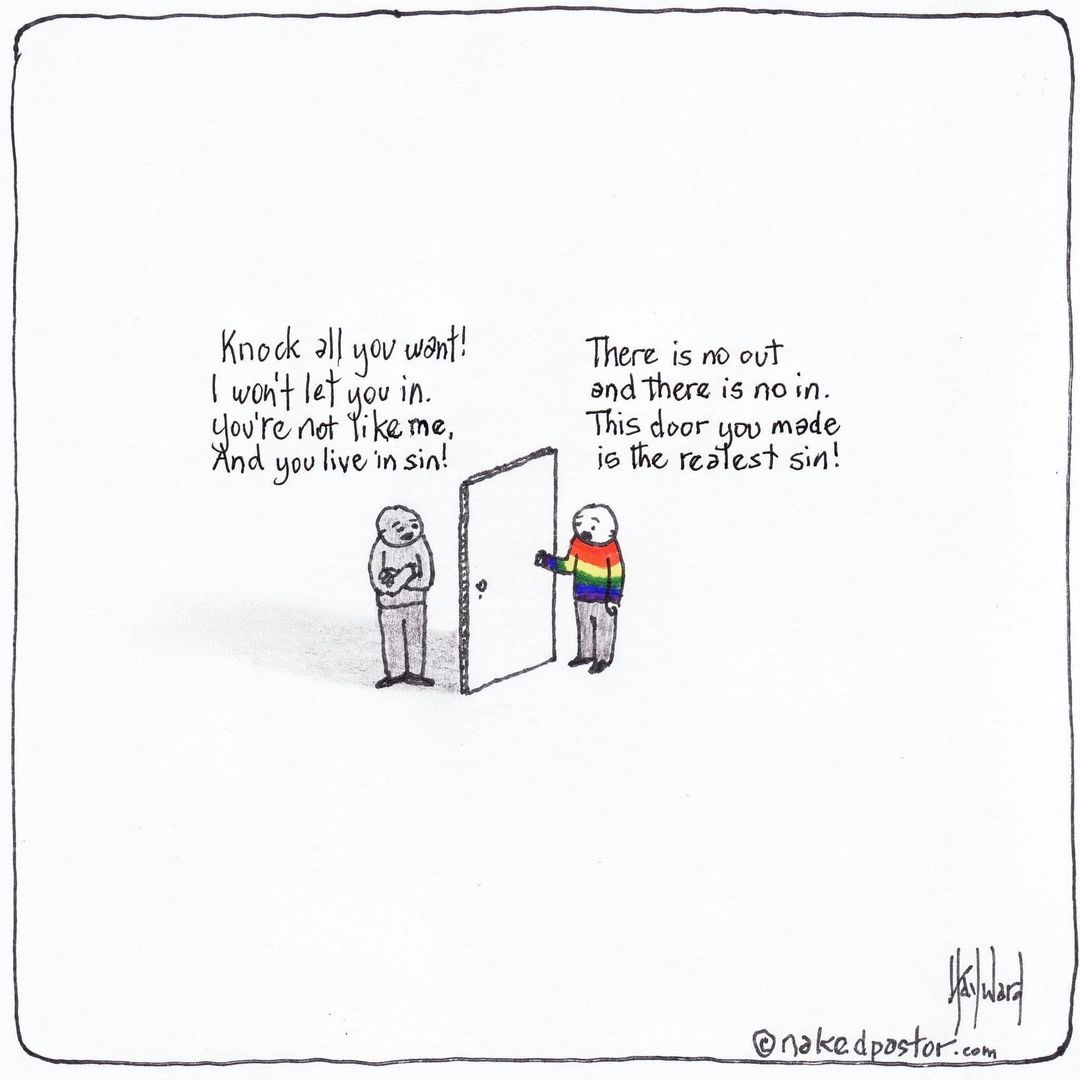
A few weeks ago, a member of the Conservative Party election team in the UK was overheard expressing an opinion about a Christian bed and breakfast establishment that had refused to allow a gay couple to share a bed. He said that what they had done was fine – they had the right to their beliefs and to enforce those in their own home. Matthew Parris is a gay columnist with The Times and The Spectator, and was an obvious person to contact when the media went into a frenzy.

The only problem is that he just couldn’t work himself up into any form of outrage. In fact, his thoughts are quite interesting as he reflects on why he didn’t feel outrage. The resultant column ran in The Spectator on 10 April 2010 – read it here, or an extract below. It’s worth the read as we consider how we should approach morality in a community and country that has chosen to cut itself loose from its historical moral compass.

… Continue Reading

Green Religion

Green Religion

The Economist, one of my favourite global magazines, did a small insert on religion and conservation in their latest edition. When business and political magazines notice the trends, it’s an indication that the trend is significant. Hopefully, one day, all churches will have joined this revolution. Click here to read the article, or see below for extracts.

… Continue Reading

One African Postcolonial Theology: The Imperative to Differ

One African Postcolonial Theology: The Imperative to Differ

Dr Kenzo Mabiala gave a brilliant talk at the first Amahoro conference in Uganda in May 2007. I recorded this on a handheld recorder – it’s worth persevering through the low quality because this lecture is sheer genius. Kenzo says that theological work done in Africa has the imperative to differ from theology from the West, and must have the courage to denouce Western theology – which “came of age during the rise of colonialism” – as being used to seeing itself as the centre around which other theologies must orient themselves (in other words: theological arrogance which claims that Western theology is the only correct theology, and all other theologies need to understand themselves in relation to Western theology).

amahoro01_Mabiala_Kenzo.mp3 (size 12 MB’s).

… Continue Reading

Should I donate to “Gift of the Givers”

Should I donate to “Gift of the Givers”

This was originally posted on 6 August 2006

The situation on the Lebanese-Israeli border over the past fortnight is horrific. It is not my intention to discuss the various merits of each side’s (by this I refer to Israel and Hizbullah) claims, although I believe both sides have a point and both have over reacted and need to be held to account for their actions.

The point of this post, however, is to ask for your input on a question this conflict has raised for me.

There is an organisation in South Africa called ‘The Gift of the Givers’. They collect essential supplies and provide services and medicines to people impacted by natural disasters and warfare. They have an impeccable reputation and are wonderfully transparent, highly accountable in their reporting and super media savvy. And they collect literally millions and millions of rands of supplies, and get it to disaster zones faster than anyone else seems able to.

And they are Muslim.

As I have considered how to contribute to some relief for those caught up in the current crisis in the Middle East, it struck me that the most appropriate and effective use of my donation would be to give it via The Gift of the Givers.

… Continue Reading

How to talk when we don’t agree – an object lesson from President Obama

How to talk when we don’t agree – an object lesson from President Obama

Originally published on 20 May 2009

Last week, President Obama spoke at the graduation ceremony of Notre Dame university. This was made controversial by the 24 hour media, as they pointed out that Obama is “pro choice” and Notre Dame is Catholic, opposing abortion. I don’t want to deal with that particular issue in this blog. But I do want to say that I think the President hit exactly the right note in HOW he dealt with the issue.

He did not sweep it under the carpet. He did not step down from his own position. But he did show how we can still talk, even when we don’t agree. He showed that there is a way to engage in which we honour all viewpoints, and work towards outcomes that make sense for everyone.

You can read a transcript here. And you can watch it on YouTube, starting here.

In Part 1 on YouTube, notice how he deals with the hecklers (and notice how none of the students heckled!!). The best bit about faith and love is in Part 3.

… Continue Reading

What the Roman Catholic Church should be doing – by Clive Simpkins

What the Roman Catholic Church should be doing – by Clive Simpkins

A colleague and friend of mine, Clive Simpkins is a deep thinker and spiritually enlightened all round nice guy (who nevertheless always tells it straight). He has great insights on a wide variety of subjects. Today, on Good Friday, he has posted a reflection on the Roman Catholic Church which is really worth reading.

Clive’s professional work is in communications. He is a great communicator himself, and helps others to improve theirs. He brings these insights to bear on how the Catholic Church has responded to fresh allegations of child abuse by some of their priests – especially in Ireland and Germany. I think his suggestions are spot on.

Read his article here.

Hannah’s Rules and ethical consumers @ TGIF

Hannah’s Rules and ethical consumers @ TGIF

Originally posted on 24 February 2008

Recently I spoke at TGIF (Thank God it’s Friday), a Christian discussion group that meets at the (ungodly) hour of 6:30am every Friday morning. I was asked to record it, and make the recording available, so it is available for downloading, by right clicking here and selecting save as. It’s about 8 Mb in size.

The content is a version of my presentation, Hannah’s Rules on the rise of the ethical consumer. It’s since been renamed, “The Future is Now” – see details here.

Thoughts on the Tyranny of Freedom

Thoughts on the Tyranny of Freedom

This was originally two postings, on 20 and 21 January 2005 – updated on 26 March 2010

George Bush gave his second inauguration speech earlier this week. Sky News tells me, he used the word “freedom” 27 times – not including references to “liberty”. This was certainly the clear theme of his speech. As a Christian, knowing that Bush is one of the most prominent voices of modern Christians, I listened with a sense of unease. I wonder of he means what I mean when he thinks of freedom?

Not only am I uneasy in general with the current US Administration (and with the millions who support it, seemingly blind to its alienation from the rest of the planet), I am specifically concerned about the fact that this Administration, embodied in Bush, has subtly redefined issues and is deluding millions of people.

I need to spend more time reflecting on my disquiet. George Bush’s speech was certainly inspiring – and he pulled it off – better than could be expected. He is known to butcher the English language – he did not do that this week. But he lacked real passion and conviction. It was obvious that he was reading someone else’s words. It was obvious that he was aiming for media-friendly sound-bites, rather than flowing, passionate speech. During the past week, he has specifically stated that he wanted to deliver a speech that would be remembered by history (maybe even carved in stone in the Capitol like other inaugural addresses have been in the past). It was not one of those. But, in general, it was a good speech – if you’re American, anyway.

… Continue Reading

Dealing with fear – sermon podcast

Dealing with fear – sermon podcast

I preached a sermon in March 2007 on the issue of Fear. I was based in Johannesburg in South Africa at the time – a city and country that lives with low level fear of crime pretty much all the time. This sermon deals with what Christians should be doing to deal with social issues that produce the environment in which crime flourishes.

Fear and crime in South Africa is a personal problem, a national problem, a kingdom problem and a spiritual problem. As Christians, we are called to respond in many ways. And ultimately we are commanded by Jesus to “Do Not Fear”. Yes, it’s a command. The sermon focuses in on Jesus’ command in Matthew 10.

Listen to the sermon by downloading it here (3 Mb, MP3 file).

Liberal politics, freedom and the role of Christianity in Britain

Liberal politics, freedom and the role of Christianity in Britain

Originally posted on 1 September 2009

I don’t agree with the political leanings of The Spectator magazine in the UK, but it certainly contains the finest writing in the English language of any magazine in the world. I read the mag regularly, just to experience excellent English. It also contains the type of opinionated columnists I enjoy. They get you thinking, and they’re inteliigent.

In their Christmas edition, there was an excellent analysis of what the official religious institution of England (The Church of England) should do. I need to think this one through in more detail, but I hope it sparks as much thought for you as it did for me.

Does England need an “official” church? Would it be better, both for the church and State, to change the current state of affairs? The original article can be found here, or read it below.

The C of E should follow John Milton’s lead

by Theo Hobson, Friday, 12th December 2008, The Spectator

Milton was a great poet but an even greater theologian, says Theo Hobson. His vision of tolerant Christian liberalism should be our template for the future
… Continue Reading

Gary Hamel speaks to church leaders on Shifting Tides

Gary Hamel speaks to church leaders on Shifting Tides

Gary Hamel is one of my favourite management gurus. His books are well written, and I have heard him speak live and in person on a number of occasions as he addressed business leaders in South Africa a few years ago. Gary was initially famous for his thoughts on innovation and helping companies create the right type of environment for innovation. More recently he has shifted his focus to the “future of management” – analysing the environment in which companies must now operate, and the structures that will help them achieve success. His book on the Future of Management is a great read – buy it at Amazon.co.uk or Kalahari.net.

What I didn’t know was that he was a Christian and has done some research on the challenges facing the church at the moment (especially in the USA). He spoke at his home church a while ago, and the talk was recorded and made available. After cataloguing the problems, he goes on to recommend some responses. And he brings his usual insightfulness to all of it. Well worth taking an hour out and watching.

… Continue Reading

What this blog site is about

Click here to read the welcome message and learn more about this blog...

Categories

Archive